
FYVE STAR™
ATMOSPHERIC WATER GENERATION
WATER IS BECOMING ONE OF THE MOST IMPORTANT INFRASTRUCTURE CHALLENGES OF OUR TIME
Across the United States and globally, water infrastructure systems are facing increasing pressure from drought conditions, aging infrastructure, rising demand, contamination concerns, operational vulnerabilities, and long-term resource challenges.
As municipalities, infrastructure groups, industrial operators, and operational environments evaluate long-term water resilience strategies, interest continues to grow in decentralized and scalable water generation technologies capable of supporting localized water production.
Atmospheric water generation technologies represent one category of emerging water infrastructure solutions designed to generate potable water directly from atmospheric moisture.
ATMOSPHERIC WATER GENERATION
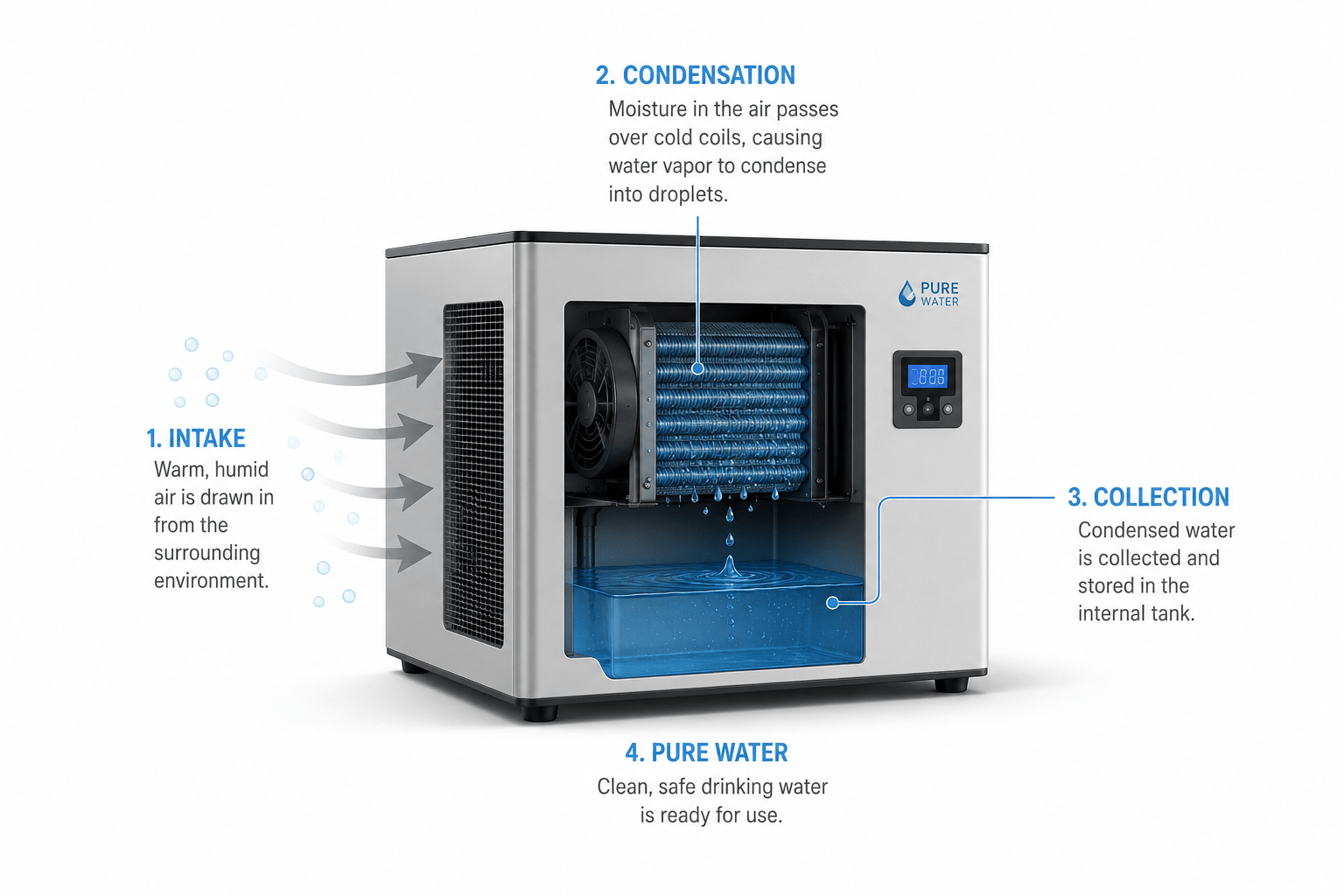
Atmospheric water generation systems are designed to capture moisture present in ambient air and convert it into usable water at the point of use.
These technologies are being explored for applications involving:
Localized water production has the potential to reduce dependency on transported water systems and vulnerable infrastructure environments while supporting scalable deployment strategies across a wide range of applications.
CORE CAPABILITIES
Core capabilities associated with atmospheric water generation technologies may include:
On-site water production
Remote and off-grid deployment capability
Reduction of transported water dependency
Support for continuous operational environments
Mobile and modular deployment strategies
Integration with filtration and treatment systems
Infrastructure flexibility and scalability
Support for decentralized water strategies
Support for closed-loop and integrated water systems
Reduced dependency on traditional fixed infrastructure
Point-of-use water generation capability
These technologies continue to attract growing attention across infrastructure, industrial, operational, environmental, and emergency support sectors as organizations evaluate new approaches to water flexibility and resilience.
HOW THE PROCESS WORKS
1. CAPTURE
Ambient air is drawn into the system where atmospheric moisture is collected.
2. CONVERT
Collected moisture is condensed and processed into potable water.
3. DELIVER
Water is stored and made available for immediate use.
This process supports localized water generation strategies across multiple deployment environments and operational conditions.
FYVE STAR’S ROLE
FYVE STAR, Inc. continues to evaluate opportunities involving advanced water-related technologies, deployment strategies, and integrated infrastructure systems as part of the broader FYVE STAR Water Suite™ framework.
FYVE STAR’s interest in atmospheric water generation is centered around:
FYVE STAR operates as:
FYVE STAR is not presented as the manufacturer of atmospheric water generation technologies.
Rather, FYVE STAR evaluates technologies and deployment opportunities capable of contributing to broader long-term infrastructure, operational, industrial, environmental, and water resilience strategies.
THE FYVE STAR WATER SUITE™
Atmospheric water generation represents one component within the broader FYVE STAR Water Suite™ framework.
The Water Suite™ approach is centered around evaluating and supporting multiple water-related technologies capable of contributing to:

Localized water production has the potential to reduce dependency on transported water systems and vulnerable infrastructure environments while supporting scalable deployment strategies across a wide range of applications.
INFRASTRUCTURE & OPERATIONAL APPLICATIONS
Atmospheric water generation technologies are being explored for applications involving:
Potential operational advantages may include:
LONG-TERM WATER INFRASTRUCTURE OUTLOOK
Water-related infrastructure challenges continue to impact regions across the United States and globally due to:
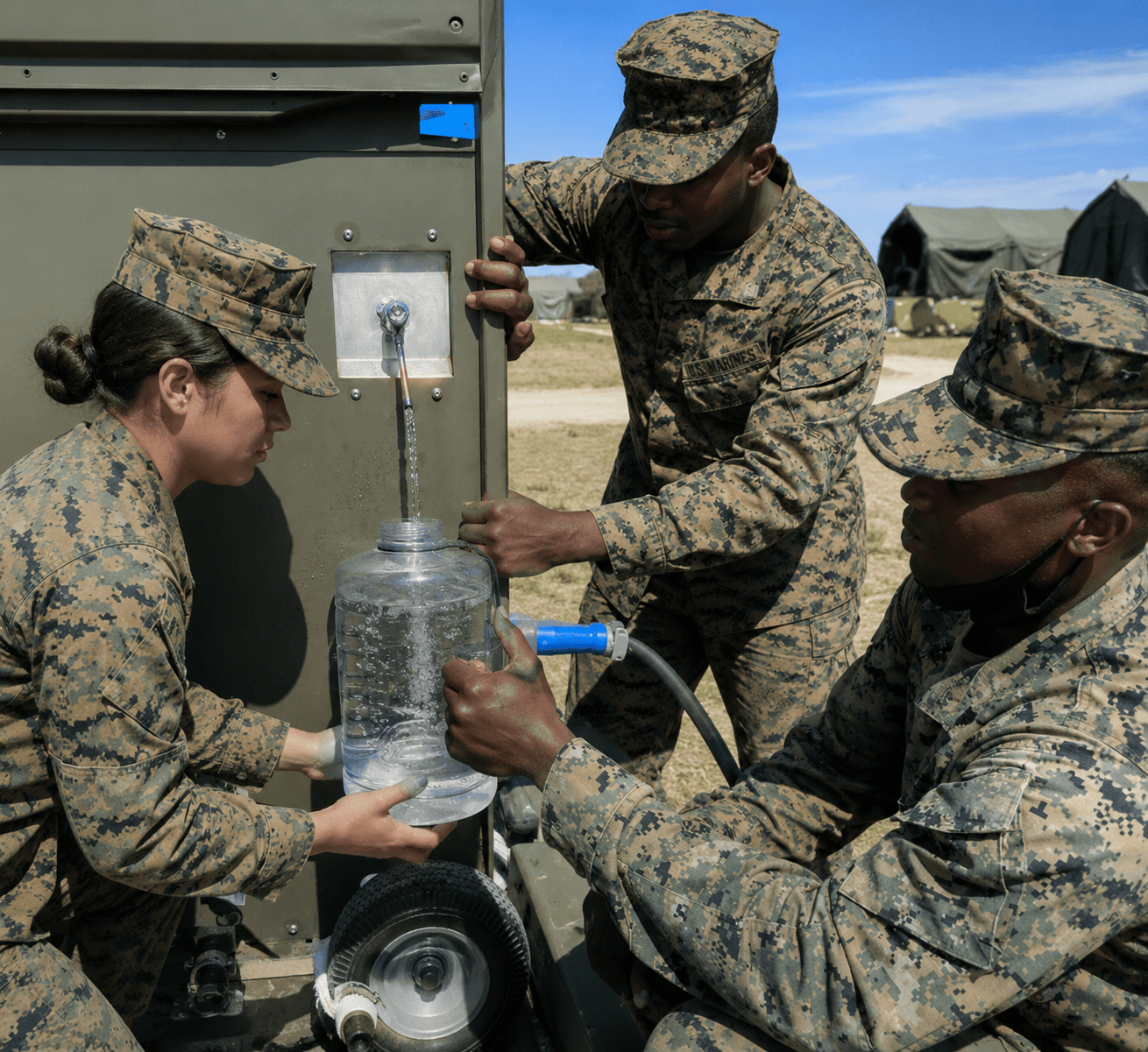
As organizations continue evaluating future water resilience strategies, atmospheric water generation technologies are receiving increasing attention as part of broader infrastructure and operational planning discussions.
INDUSTRY ALIGNMENT & COLLABORATION
Atmospheric water generation and related water infrastructure technologies continue to attract growing interest across infrastructure, industrial, environmental, operational, and emergency support sectors.
FYVE STAR welcomes discussions involving:
FYVE STAR welcomes conversations with aligned technology developers, infrastructure groups, operational partners, and organizations interested in advancing practical and scalable water-related infrastructure solutions.
BEGIN THE CONVERSATION
FYVE STAR, Inc.
Strategic Water Solutions
FYVE STAR WATER SUITE™
The future of water infrastructure is increasingly focused on flexibility, resilience, scalable deployment capability, and localized support strategies capable of adapting to changing operational and infrastructure demands.